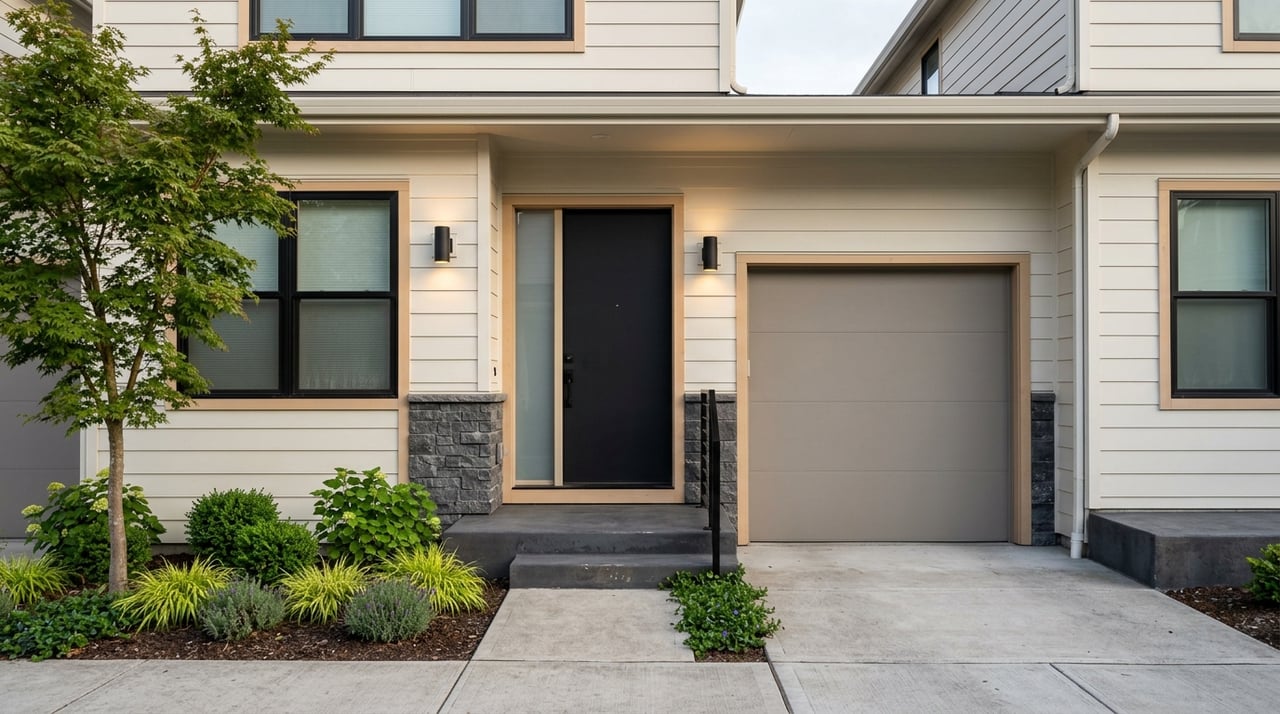
If you want Westside convenience without the full upkeep of a detached house, Bull Mountain is worth a closer look. Attached homes here can offer a practical mix of manageable space, garage parking, and access to Tigard, Beaverton, and Portland routes. If you are weighing a condo or townhome in this area, it helps to understand how Bull Mountain is laid out, what current listings suggest, and what Oregon buyers should review before making an offer. Let’s dive in.
Why Bull Mountain appeals
Bull Mountain sits in southeastern Washington County, about 10 miles southwest of downtown Portland. Washington County describes it as a distinct residential community that relies on nearby Tigard and Beaverton for many retail and employment needs.
For you, that often means a quieter residential setting with practical access to everyday destinations. Major roads serving the area include Highway 99W, Scholls Ferry, Roy Rogers, Beef Bend, and Bull Mountain Roads, and transit service runs along 99W and from Washington Square with connections toward Beaverton Transit Center and Westside Light Rail.
How Bull Mountain is shaped
One thing that makes Bull Mountain different is its terrain. Washington County notes that steep slopes exceed 20% across large areas on the north and south sides, which can affect views, driveway access, and the feel of one attached-home community versus another.
The county plan also describes development patterns that start with medium-density housing along collector and arterial roads at the foot of the hill, with lower densities as you move uphill. In simple terms, attached-home options can vary a lot by micro-location.
What attached homes look like here
Recent Bull Mountain listing snapshots point to a relatively limited supply of condos and townhomes. One recent search snapshot reported 1 condo and 2 townhouses for sale in the past month, which suggests you may not see a large number of options at once.
The homes themselves tend to fall into a fairly consistent size range. Recent examples cluster around 1,200 to 1,700 square feet with 2 to 3 bedrooms, and many include garages and multi-level layouts.
A recent townhome example in the area offered 2 bedrooms, 2 bathrooms, 1,384 square feet, and a three-level plan. Another townhome example had 2 bedrooms, 2.5 bathrooms, and 1,236 square feet. A recent condo example featured 3 bedrooms, 2 bathrooms, 1,228 square feet, a ground-floor layout, a fenced backyard, and a one-car garage.
Taken together, these examples show a common Bull Mountain tradeoff. You may get a smaller footprint than a detached house, but you can still find features that matter to many buyers, such as garage parking, updated layouts, and shared amenities.
What pricing may look like
Recent attached-home snapshots in Bull Mountain ran roughly from the high $300,000s to the mid-$400,000s. That does not define the whole market, but it gives you a useful baseline if you are comparing Bull Mountain to nearby Westside areas.
Because supply appears limited, pricing can feel very property-specific. Layout, level count, garage setup, HOA structure, and exact location within Bull Mountain can all shape value.
Condo vs townhome in Bull Mountain
If you are shopping attached homes here, one of the most important questions is not just style. It is ownership structure.
In Oregon, a condominium is a separate legal form of ownership. The Oregon Real Estate Agency says you own the unit plus an undivided interest in the common elements, which can include things like landscaping and parking areas.
Many townhome-style neighborhoods, on the other hand, may fall under Oregon’s Planned Community Act. That means two homes that look similar from the outside can come with very different documents, maintenance responsibilities, and association rules.
Why that difference matters
The monthly HOA fee is only part of the picture. You also want to understand what the association maintains, how it plans for future repairs, and what rules apply to daily use.
For planned communities in Oregon, reserve accounts, reserve studies, and maintenance plans are required for common property. That matters because those documents help show how the association prepares for major repair or replacement costs over time.
What to review before you buy
If you are considering a condo or townhome on Bull Mountain, due diligence matters just as much as the floor plan. Oregon law and agency guidance point to several key documents and policies that can affect your ownership experience.
Here is a smart review list:
- Confirm whether the property is a condo or a planned community
- Review the declaration and bylaws
- Check the association budget
- Ask for the reserve study and maintenance plan
- Read current rules and regulations
- Confirm the parking policy
- Review pet policy
- Review rental policy
- Ask about any special assessment history
This step can help you avoid surprises later. It can also help you compare two similar-looking homes in a more informed way.
Lifestyle benefits of Bull Mountain attached homes
For many buyers, the appeal of condo and townhome living is not just price. It is also about daily life.
Attached homes in Bull Mountain can be a strong fit if you want less exterior maintenance and a more predictable amount of space. That can be especially appealing if you are buying your first home, downsizing, or simply looking for a more manageable setup on the Westside.
You may also find community features that support an easier routine. One recent condo listing highlighted low HOA dues tied to a community center, park, and pool, while Tigard’s Elizabeth Price Park on SW Bull Mountain Road offers drinking water, a picnic area, a playground, and an interpretive trail.
Access and convenience
Bull Mountain is not designed as a fully self-contained urban center. Instead, its value often comes from how well it connects you to nearby destinations.
That can work well if you want a residential setting while staying close to Tigard and Beaverton shopping, services, and job centers. The road network and transit connections also support access across the Westside.
For buyers who like to stay active, Tigard also provides bike maps and route information. That can be useful in a hillside area where routes and elevation may shape how you move through the neighborhood.
Tradeoffs to think through
Every property type comes with tradeoffs, and Bull Mountain attached homes are no exception. The biggest ones are often HOA governance, shared decision-making, and multi-level living.
You may gain lower-maintenance living and shared amenities, but you may also need to follow rules about parking, pets, rentals, or exterior changes. In some communities, the hill setting can also affect entry access, stairs, and driveway experience.
That is why I always encourage buyers to look past photos and square footage. A careful review of the community, documents, and day-to-day function of the home can tell you far more than a listing summary alone.
How to shop Bull Mountain wisely
If Bull Mountain is on your shortlist, try to compare homes through both a lifestyle lens and a numbers lens. A lower-maintenance setup can be a real benefit, but only if the layout, HOA structure, and location fit how you actually live.
As you evaluate options, focus on a few essentials:
- How much stairs and vertical living works for your household
- Whether the garage and storage are enough for your needs
- What the HOA covers versus what you maintain yourself
- Whether the reserve study and maintenance plan look healthy
- How the specific location affects access, parking, and convenience
In a market with limited attached-home inventory, preparation matters. When you know what questions to ask early, you can move more confidently when the right home comes up.
If you are considering condo or townhome living on Bull Mountain, I can help you look beyond the surface and evaluate the details that really matter. When you are ready for clear, step-by-step guidance, schedule a consultation with Julie Williams.
FAQs
What is condo living like on Bull Mountain?
- Recent Bull Mountain condo examples suggest practical layouts, roughly 1,200 to 1,300 square feet in some cases, with features such as garages, fenced outdoor space, and possible shared amenities depending on the community.
What is typical for Bull Mountain townhomes?
- Recent townhome examples in Bull Mountain commonly fall around 1,200 to 1,700 square feet with 2 to 3 bedrooms, multi-level floor plans, and garage parking.
What price range do Bull Mountain attached homes fall into?
- Recent condo and townhome snapshots in Bull Mountain ran roughly from the high $300,000s to the mid-$400,000s.
What should buyers review in a Bull Mountain HOA?
- Buyers should review whether the property is a condo or planned community, along with the declaration, bylaws, budget, reserve study, maintenance plan, rules, parking policy, pet policy, rental policy, and any special assessment history.
What makes Bull Mountain different from other Westside areas?
- Bull Mountain offers a distinct residential setting with hillside terrain, access to major Westside roads, and proximity to Tigard and Beaverton services, which can make attached-home options feel different from flatter nearby communities.